

Wisdom teeth — also known as third molars — are the last set of teeth to erupt, usually appearing between the ages of 17 and 25. For some people, they come in without any problems. For others, they can cause pain, infection, or misalignment, requiring professional removal.
At North Oakville Dental, we understand that wisdom teeth removal can sound intimidating. Many patients have questions about when it’s necessary, what the procedure involves, and what recovery looks like. To help you feel informed and confident, we’ve answered the top questions we hear from our Oakville patients about wisdom teeth extraction.
1. Why Do We Have Wisdom Teeth in the First Place?
Wisdom teeth were useful for our ancient ancestors, who needed extra molars to chew coarse foods like roots and nuts. However, as human diets and jaw sizes evolved, these extra teeth became less necessary.
Today, many people don’t have enough space in their jaws for wisdom teeth to erupt properly. This lack of space often causes them to grow in at odd angles, become impacted, or press against existing teeth — leading to pain or infection.
2. How Do I Know If My Wisdom Teeth Need to Be Removed?
Not everyone needs their wisdom teeth removed, but most people experience some form of complication when they erupt. Here are a few signs that you may need an extraction:
- Pain or swelling at the back of your mouth
- Red, inflamed, or bleeding gums
- Jaw stiffness or difficulty opening your mouth
- Bad breath or an unpleasant taste (from trapped bacteria)
- Crowding or shifting of nearby teeth
Even if your wisdom teeth aren’t causing symptoms, your dentist may recommend removal if X-rays show they are impacted or growing at an angle that could cause future problems.
At North Oakville Dental, we perform thorough exams and imaging to determine the best course of action for each patient.
3. What Does “Impacted Wisdom Teeth” Mean?
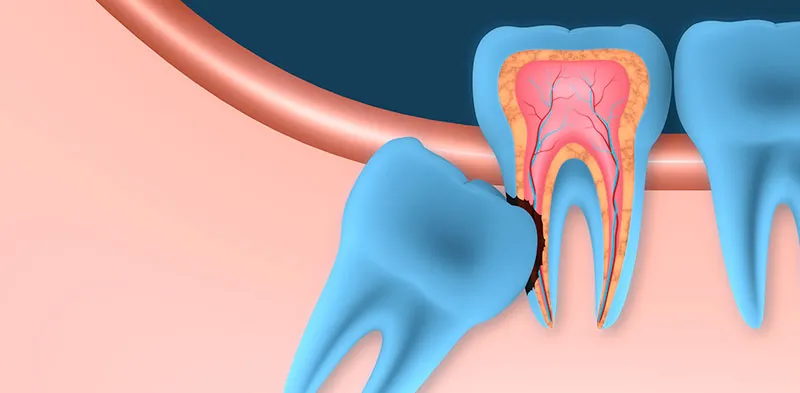
An impacted wisdom tooth is one that cannot fully erupt due to a lack of space or obstruction by other teeth. Impacted teeth can grow sideways, remain trapped beneath the gum, or only partially break through.
There are two main types of impaction:
- Soft tissue impaction: The tooth emerges from the bone but stays covered by gum tissue, increasing infection risk.
- Hard tissue impaction: The tooth remains completely trapped under the bone and requires a surgical approach for removal.
Impacted wisdom teeth can cause infections, cysts, or bone damage if left untreated — which is why timely evaluation and removal are essential.
4. When Is the Best Time to Have Wisdom Teeth Removed?
The ideal time for removal is usually in the late teens or early twenties, before the roots are fully developed. Younger patients tend to heal faster and experience fewer complications.
However, it’s never too late to have problematic wisdom teeth removed. Many adults in Oakville undergo extraction to relieve chronic pain, infections, or jaw issues. The key is to address concerns as early as possible before they lead to more serious dental problems.
5. What Happens During the Wisdom Teeth Removal Procedure?
Wisdom teeth extraction is a common and straightforward procedure at North Oakville Dental. The process typically involves:
- Consultation and Imaging: We start with X-rays to determine the tooth’s position and plan the procedure.
- Anesthesia or Sedation: Depending on your comfort level, you may receive local anesthesia, nitrous oxide, or IV sedation to ensure a calm experience.
- Extraction: Dr. Blumenfeld carefully removes the tooth. Simple extractions are done quickly, while surgical removals may involve small incisions in the gum or bone.
- Cleaning and Closure: The site is cleaned, and stitches may be placed if necessary.
- Recovery Instructions: You’ll receive clear aftercare guidance to help you heal smoothly.
The entire procedure often takes less than an hour, and most patients are surprised by how comfortable and efficient it is.
6. Is Wisdom Teeth Removal Painful?
Many patients worry about pain, but the truth is that the procedure itself is virtually painless thanks to modern anesthesia and sedation options.
You may feel pressure during the extraction, but no sharp pain. After the procedure, mild soreness or swelling is normal and can be managed with over-the-counter pain relievers, cold compresses, and rest.
At North Oakville Dental, we offer sedation dentistry to ensure even the most anxious patients can feel completely at ease during treatment.
7. How Long Is Recovery After Wisdom Teeth Removal?
Recovery time varies depending on how many teeth were removed and whether the extraction was simple or surgical. Generally:
- Most patients recover within 3 to 5 days.
- You may need up to a week for full healing if stitches are involved.
- Swelling typically peaks on the second day and gradually subsides.
To ensure a smooth recovery:
- Avoid strenuous activity for 24–48 hours.
- Eat soft foods like yogurt, soup, or mashed potatoes.
- Avoid using straws or smoking to prevent dry socket, a painful condition caused by dislodged clots.
- Keep the area clean by rinsing gently with warm salt water.
Our team provides detailed instructions and follow-up care to help you heal comfortably and quickly.
8. Can All Four Wisdom Teeth Be Removed at Once?
Yes, and in most cases, it’s recommended. Removing all four teeth in a single appointment reduces overall recovery time and prevents the need for multiple procedures.
At North Oakville Dental, we’ll assess your situation and help you decide whether removing all four at once is the best option for you.
9. Are There Risks to Wisdom Teeth Removal?
As with any medical procedure, there are small risks such as infection, dry socket, or temporary numbness in the tongue or jaw. However, complications are rare when the procedure is performed by an experienced dentist.
Dr. Blumenfeld and our team take every precaution to minimize risk, using advanced technology and precise surgical techniques to ensure a safe and successful outcome.
10. What Happens If I Don’t Get My Wisdom Teeth Removed?
Leaving problematic wisdom teeth untreated can lead to serious oral health issues, including:
- Tooth decay in partially erupted teeth
- Gum infections or abscesses
- Damage to neighboring teeth or roots
- Jaw stiffness or chronic pain
- Cysts or bone damage
Early removal not only prevents pain but also protects your long-term oral health.
Your Trusted Team for Wisdom Teeth Removal in Oakville
At North Oakville Dental, we combine experience, technology, and compassion to make wisdom teeth removal as easy and comfortable as possible. Whether you’re a teen needing early evaluation or an adult ready to address ongoing discomfort, our team provides expert care from consultation to recovery.
With IV sedation, modern surgical tools, and a patient-first approach, you can rest assured that your experience will be smooth and stress-free.
Don’t ignore wisdom teeth pain or wait for complications to arise. Contact North Oakville Dental today to schedule an evaluation and find out the best treatment plan for your smile.